Where to Sell a Business: Top Platforms and Expert Tips
Discover where to sell a business, from online marketplaces to professional brokers. Learn tips to maximize value and close deals efficiently.
Brian Dukes
Brian holds a Mechanical Engineering degree from Michigan Tech, where he also served as captain of the men’s basketball team. He began his career at Deloitte, earned his MBA from the University of Michigan, and later co-founded and scaled a technology agency to more than $1 billion in value. Today, he leads Exitwise, guiding founders through the M&A process with confidence and clarity, and has supported over $1 billion in successful business sales.
Deciding where to sell a business can be nerve-wracking. What if the platform you choose isn't ideal for your industry? What if you could make more money or sell faster on another platform?
In today's guide, we discuss various platforms on which you can list your online or offline business to reach an extensive network of qualified potential buyers.
At Exitwise, we believe the best decision you can make when selling a business is to hire the right experts to help you.
We help you find and work with the best M&A experts in your industry to ensure you sell your business on the best possible terms and at the highest price possible.
Short on time? Here are places you can sell your business:
Exitwise
Professional Business Brokers
Biz BuySell
BusinessForSale
BuySellEmpire
Acquire
FE International
Empire Flippers
When Should You Decide to Sell a Business?
Determining the right exit timing affects everything from how you price your business to after-sales proceeds.
Here are key signs that it might be the right time to sell your business
Market Conditions are in Your Favor: If there's a high demand for businesses like yours, it could be the perfect time to put your business on the market.
Business is at its Peak Performance: If your business’s profits are booming, operations are running efficiently, your reputation is high and positive, it might be an ideal time to sell. You’ll not only command the best price but also attract high-quality buyers.
Feeling Burned Out: If running your business is taking a toll on your mental and physical health, it might be the right time to sell it.
Achieved Your Goals: If you’ve accomplished the original goals you’d set when starting the business, you might consider selling it.
Received Unsolicited Offers: If you've received an offer from a buyer who is genuinely interested in your business means your business holds value, and you might consider selling it.
Online Business Marketplaces vs. Private Sales
Many business owners face a critical decision whether to sell a business privately or use an online platform.
Below, we’ve broken down the pros and cons of each method and the best scenarios:
Online Business Marketplaces
Private sales
Publicly accessible digital platforms where sellers list their businesses to reach a broad base of registered buyers.
Transactions conducted directly between the seller and the buyer, often led by an expert. They are fully confidential and do not involve public advertising.
Pros
Pros
Access a broader pool of qualified buyers.
A wide array of built-in marketing tools to accelerate the sales process.
Exposes you to higher competition, which may lead to better offers.
More control over the sale process.
Offers you more flexibility in pricing.
Saves you high costs, including broker fees or agent commissions.
A potential for a higher sale price as you target strategic buyers.
Cons
Cons
Charge substantial fees, which eat into your net proceeds.
Public exposure may make it difficult to maintain confidentiality.
Features unvetted inquiries, which may delay buyer screening.
Limited market reach and exposure.
Time-consuming, as it may take longer to identify qualified buyers.
Less competition and may reduce the seller’s leverage.
Best For
Best For
Sellers seeking a broad market exposure and access to a large number of potential buyers.
Sellers looking to have full control of their business sale while maximizing its value.
Best Business for Sale Websites to Reach Qualified Buyers
Business-for-sale sites vary significantly in reach, target buyer type, and visibility.
Below are some sites to consider:
Website Closers: Known for its M&A capabilities, it is used to list tech, SaaS, and eCommerce businesses. Unlike self-service marketplaces, where you handle all listings, this platform assigns a dedicated professional to help you navigate the sale process from buyer screening to deal closing.
Quiet Light: An advisory-led platform known for listing 6 to 7-figure online businesses, particularly content sites, eCommerce, and SaaS. It has built a strong reputation for Amazon FBA business sales in the eCommerce sector.
BizQuest: Operates within the same ecosystem as BizBuySell, giving you additional exposure. The site works best if you want to list your business sale in specific regions, as it offers location-specific searches.
Flippa: Offers a diverse range of listings for digital businesses, especially SaaS, eCommerce, apps, content websites, and affiliate sites. It integrates legal document builders and offers payments through Escrow.
BizScout: Uses AI-powered tools to connect you with serious buyers. Besides, it’s ideal for selling off-market businesses that aren't listed on conventional platforms.
BusinessBroker.net: Offers maximum nationwide reach for your listing. If you want to reach serious, qualified buyers and are considering a broker-representation listing, this might be the right platform.
Strategies for Preparing Your Business for Sale
When selling a business, you'll want to maximize its value and improve its sellability score for a smoother, more successful exit.
Streamlining Operations: Analyze your business operations and find improvement areas to save money, time, and other resources. You can optimize workflows, reduce redundancies, or automate some tasks.
Financial Preparation: Review and organize all your financial documents for the current year and the past 3-5 years. Be ready with accurate balance sheets, tax records, income statements, cash flow statements, and more.
Legal Preparation and Compliance: Ensure all your contracts with suppliers, employees, customers, and other stakeholders are in order. If your business requires antitrust approvals, secure them before kickstarting the sale.
Maximize Profitability: Find ways to increase revenues while managing costs. Buyers want a profitable business that can pay off debts and other expenses comfortably.
Get a Business Valuation: Secure a business valuation early on, including a detailed valuation report. A valuation helps you set a realistic sale price and identify improvement opportunities to maximize your business's value.
Improve the Management Team: Ensure you have a strong team that can run the business efficiently after the sale and help the new buyer to settle.
Hiring the Right Experts: Selling a business is not easy. You can hire professionals to help you with the sale, including getting the business ready.
Now, let’s look at the best places to sell your business.
Where to Sell Your Business
You can sell your business across various places, depending on its financial health, industry, type, and other factors.
Now, let's take a quick look at some key business selling platforms:
1. Exitwise
We believe the best decision you can make when selling your business is to work with M&A experts to get your dream exit.
But where do you find qualified experts who understand your industry and business? At Exitwise.
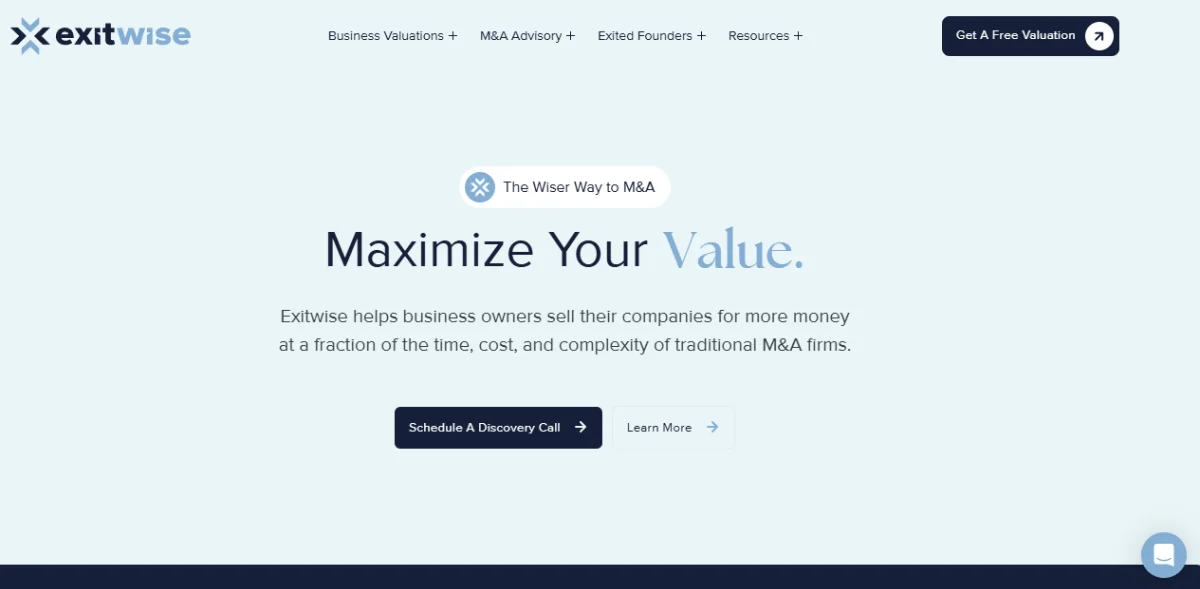
While not a marketplace, Exitwise helps business owners sell their companies at a fraction of the cost of traditional M&A firms.
Here's how:
We have years of experience in connecting business owners with the right M&A experts to help them sell their business. You don’t have to break the bank to hire the best experts.
We have a global network of over 450 industry-specialized M&A experts with over 3,000 businesses sold through our network. By working with us, you avoid generalist M&A advisors who often leave money on the table or fail to sell, despite costing you a fortune.
The M&A experts in our network have a network of pre-vetted potential buyers looking to buy businesses like yours at the right price.
Our proven 3-step model puts more money in your pocket from the sale. The investment bankers we link you with unlock the full value of your business and can increase the purchase price by up to 30%.
We ensure you work with efficient M&A attorneys who can reduce business selling expenses by up to 15% while streamlining the entire legal process.
We can help you determine your business's value before you begin the exit process.
Online or offline business brokers are agents who can help you get your business ready for sale, value it, and sell it. They have specialized sectoral expertise and experience.
You can also count on their databases of pre-qualified potential buyers, which can help you find a buyer sooner.
Business brokers typically serve businesses of different sizes, so you don't have to worry about not finding a suitable one to help sell your small or large business.
3. BizBuySell
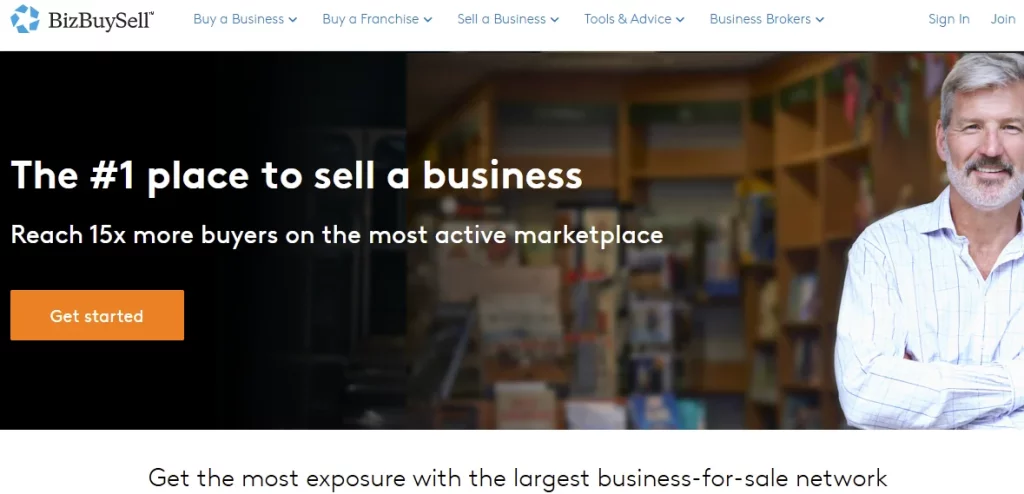
BizBuySell is a leading marketplace for businesses across various sectors looking to sell. It boldly claims to show your business to over three million visitors monthly.
Your business-for-sale listing appears on the platform's wide network, including BizBuySell, BizQuest, AllBusiness.com, The Wall Street Journal, and LoopNet. These multiple showings increase your chances of finding the best buyer sooner.
4. BusinessesForSale
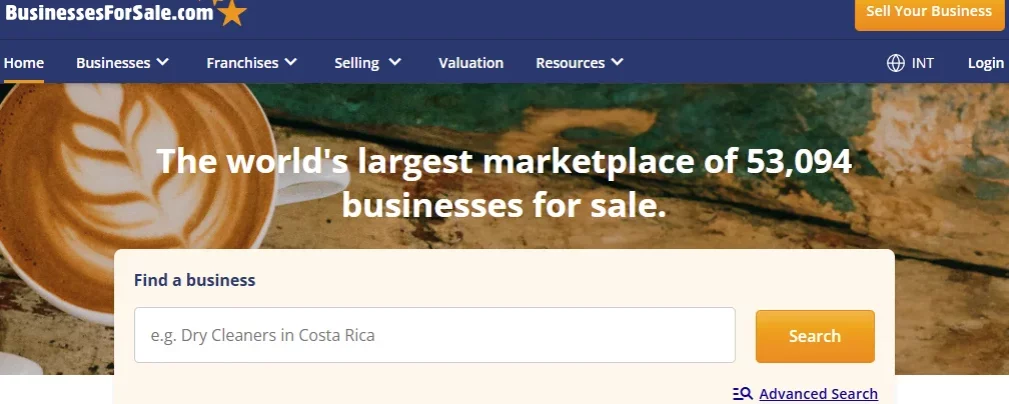
BusinessesForSale is an international platform that lists both online and offline businesses across sectors like hospitality, agriculture, the great outdoors, and more.
Besides selling a business, you can also use the platform to sell franchises.
5. BuySellEmpire
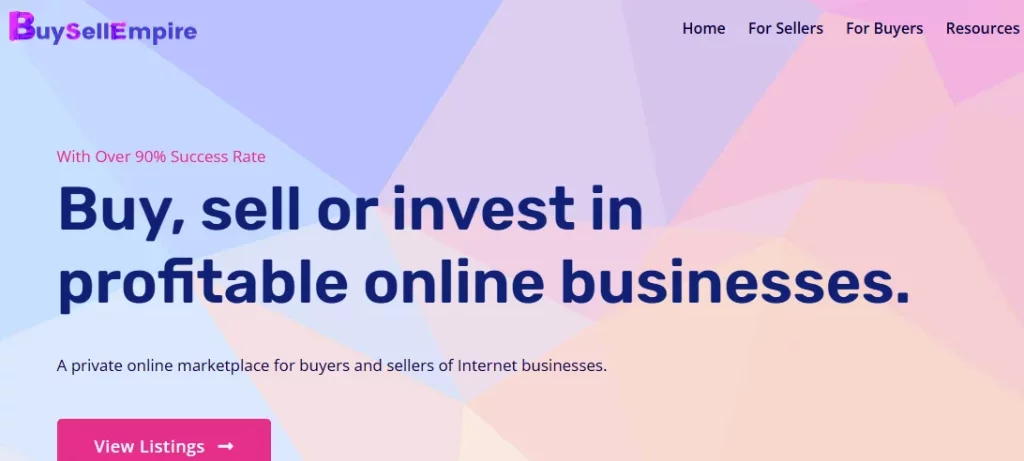
BuySellEmpire is a top private online marketplace that connects buyers and sellers of internet businesses, such as Amazon FBA, content sites, SaaS, Amazon Associates, and Chrome extensions.
The platform uses a tiered fee system, payable by the sell-side upon a successful sale. You can expect to pay 4% to 7% of the sale price.
6. Acquire
Acquire focuses largely on bootstrapped SaaS startups but also helps with selling content businesses, agencies, and e-commerce businesses.
The platform boasts over 500k potential buyers with over $2 billion in verified financial buying muscle, meaning you can sell your business faster with the right listing.
7. FE International
FE International reports having a 94.1% success rate in selling businesses to its network of over 80,000 qualified buyers.
The firm serves technology businesses, helping founders sell their businesses on their own terms.
8. Empire Flippers
With Empire Flippers, you can expect a personalized approach to selling your online business or website. They handle all communications between you and the buyer so you can focus on managing and growing your business.
The platform guarantees qualified, serious buyers and faster sales with the lowest exclusivity period.
You are allowed to de-list your business or list it on other platforms simultaneously if it doesn’t sell within two months.
How to Choose the Best Platform to Sell Your Business Fast
Whether you are selling a small business or a large one, choosing the best platform can help you sell sooner and more effectively.
However, the task can be overwhelming if you don't know the main factors to consider while choosing the platform.
Here's a quick overview to guide you:
Quality of Reach: While a platform may have a significant national or international reach, it can help sell a business better if it reaches relevant buyers. Look for a platform with an active industry-specific user base of pre-vetted and pre-qualified potential buyers.
Ease of Creating a Listing: You should be able to make a listing easily. Choose a platform that allows you to add as much information as possible to attract serious buyers. You should also be able to add your financial details, operational data, and ownership information, among other aspects.
Platform's Reputation: Ensure the platform has a proven track record of successfully selling businesses. You can check online reviews and testimonials or ask for recommendations from former business owners.
Focus on Your Industry: A platform that focuses on your niche can help you find a targeted buyer faster.
Available Marketing Tools or Options: You are more likely to sell faster if the platform provides the right tools or options for marketing your business to the right prospective buyers. Look for options such as email marketing, SEO, and social media marketing to promote your listing.
Fees for Selling on the Platform: Most platforms charge listing fees and commission rates. Check if you can afford these charges before and after the sale.
Factors to Consider for Successfully Selling Your Business
The process of selling a business relies on many dynamics, and it can be challenging to monitor all these factors.
Here are the key aspects to consider to increase your chances of success:
Timing the Sale: You must determine the right time to sell your business. Sell at a time when the business is doing well financially, when you are psychologically ready to sell, or when the market conditions are favorable.
Choosing the Right Buyer: Finding a strategic buyer is one of the best ways to sell a business. You'll want one that aligns with your business values, long-term vision, and goals. The buyer’s financial capability and industry experience or expertise are also important.
Maintaining Business Performance: If you let business performance decline during the M&A process, its value and sellability may reduce. You should maintain high levels of operational, managerial, and financial performance.
Business Value: Understanding your business's worth helps you set the right asking price. If it's too much, you risk discouraging potential buyers. A low asking price would mean leaving money on the table.
Your Involvement During and After the Sale: Most business owners make the mistake of disconnecting themselves from the sale process, yet they are the ones who know their business the best. Ensure you or your top management remain on top of the process for a smoother sale. Depending on the buyer, you may also have to be supportive during the transition and integration.
How to Negotiate Offers and Structure the Deal With Confidence
How you negotiate and structure the deal can mean maximizing your after-sale proceeds or leaving money on the table.
Here is a step-by-step guide to navigate this phase of your business sale with confidence:
Understand Your Business’s Value: Have a fair asking price based on solid professional valuation, not guesswork. You can use the Exitwise free business valuation calculator.
Look at Buyer’s Alignment: Prioritize buyers that align with your business’s values and goals because they understand your business’s worth beyond its financial capabilities.
Ensure Business Performance Stays at Peak: Operate your business at peak performance throughout the sale process to make it more attractive to buyers and give you an edge in negotiations.
Be Actively Involved from Start to Close: Stay on top of the process from buyer screening, due diligence, to deal structure negotiations, to explain your business’s financial and operational nuances to interested buyers.
Engage M&A Experts in Your Industry: Work with M&A experts in your industry to help you qualify buyers, negotiate better terms, and close the deal on favorable terms.
Plan for Post-Closing: Make your post-sale expectations clear early, especially during negotiations.
Should I Hire a Broker to Sell My Business?
While you can sell a business without a broker, working with one can help you sell faster as they usually have a broad network of prospective buyers.
Brokers know how to sell a business and have experience working with both buyers and sellers to smoothen the process.
However, they are typically generalized and lack specific industry expertise. They may also reduce your control over the process and not fully understand the nuances specific to your business. These shortcomings could make the selling experience less fulfilling for you.
The solution?
To maximize your exit, it’s better to hire M&A experts who specialize solely in your industry for a more rounded understanding of the sale.
We at Exitwise exist to help you find, recruit, and work with top-rated experts in your industry.
You can count on our proven three-step method, which includes an extensive initial consultation, connecting you with top M&A experts, and helping you work with them to actualize the sale.
We'll help you find the best finance accountants, wealth advisors, corporate lawyers, and investment bankers. Schedule a consultation with us today to achieve the exit you've always imagined.
Frequently Asked Questions (FAQs)
Let's end with a few common questions about selling a small business:
How Much Do Brokers Charge to Sell a Business?
Business brokers' fees are usually in the form of commissions that typically average 10% but can be as much as 20%, depending on the industry.
Your broker may also have other charging methods, such as per-transaction fees, retainer fees, consultation fees, and success fees. The amounts can vary widely.
How Long Does It Take to Sell a Business?
The selling time typically ranges from one to 12 months, depending on the business, its financial health, and prevailing market conditions.
The duration can be over a year for larger businesses.
Determining where to sell a business doesn't have to be nerve-racking now that you know the key platforms to consider.
You'll need to choose the one that best aligns with your business goals, values, and expected outcome.
If you’re still unsure, you can enlist the help of top-notch M&A experts, like wealth advisors, investment bankers, and finance accountants, to reach the decision more easily.
At Exitwise, our proven three-stage process helps you find and collaborate with the best M&A experts in your industry to optimize the sale terms and price.
Let Exitwise introduce, hire and manage the best, industry specialized, investment bankers, M&A attorneys, tax accountants and other M&A advisors to help you maximize the sale of your business.